Negotiating the Iran War
August 10, 2026
11:00am
Webinar
The Iran war has entered a new and uncertain phase. While military confrontations have reshaped the strategic landscape of the Middle East since the conflict began earlier this year, diplomatic efforts to prevent further escalation are unfolding in parallel. Negotiations over regional security, maritime access via the Strait of Hormuz, and the future of Iran’s nuclear program have become increasingly urgent as governments across the region seek to avoid a wider war while advancing competing political and security objectives. Recent developments underscore a central question facing policymakers today: can diplomacy succeed while conflict continues?
On Monday, August 10, at 11 am PT, the Pacific Council will host a webinar examining the evolving conflict between Iran, Israel, and the United States, and its latest developments in negotiating an end to the war. Professor Sahar Razavi, Associate Professor of Political Science at California State University, Sacramento, in conversation with Dr. Jerrold D. Green, President Emeritus and Senior Fellow for Middle East and South Asia, will discuss the political calculations shaping negotiations, the role of regional actors, and what the current moment may reveal about the future of the Middle East.
Why it's important:
- 18 American servicemembers have been killed in this war, adding more pressure on President Trump to reach a deal to end the war.
- The U.S., Iran, and Oman are closing in on a deal, which has been under negotiations for several weeks, aimed at resuming the ceasefire between the U.S. and Iran and restarting negotiations over a nuclear deal.
- Before the war, the Strait of Hormuz was an international waterway open to all. Now, vessels heading into the Persian Gulf would transit a channel controlled by Iran and ships leaving the gulf would travel on a channel near Oman, making the future of the Strait a bargaining chip for Iran.
Speakers include:
- Professor Sahar Razavi, Associate Professor of Political Science, California State University, Sacramento
- Dr. Jerrold D. Green, President Emeritus & Senior Fellow for Middle East & South Asia, Pacific Council on International Policy
To register for this webinar, visit the Zoom Registration Page.
Guest Speaker
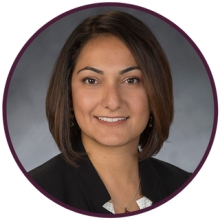
Professor Sahar Razavi is an Associate Professor of Political Science, the Director of the Iranian and Middle Eastern Studies Center, and the Faculty Scholar at the Southwest Asian and North African Center at Sacramento State. She earned her PhD in Political Science at Northern Arizona University. She teaches a range of courses in Comparative Politics, including courses on revolutions, nationalism, and the Middle East. Her past research has centered on conflicts of state and society in Iran, including the 1953 coup d’etat and the 1979 revolution. Currently, she is conducting a mixed-methods study on Iranian American racial identity, deploying the first-ever national survey of the Iranian diaspora in the United States. She is also co-authoring a textbook on the geopolitics of the Middle East and North Africa. Recent publications have focused on the Women, Life, Freedom movement, the intracommunity tensions among Iranian-Americans resulting from it, and Iranian national identity in the Pahlavi and post-revolutionary periods.
Presider
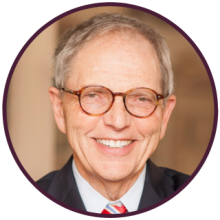
Dr. Jerrold D. Green is Global Advisor to Cedars-Sinai Medical Center, Senior Fellow at the UCLA Burkle Center for International Relations, and President Emeritus and Senior Fellow for the Middle East and South Asia at the Pacific Council on International Policy. A leading expert on Middle East affairs, he has lived and worked in Egypt, Iran, and Israel, held senior leadership positions at the RAND Corporation, and served as a Research Professor of Communication, Business, and International Relations at the University of Southern California. He holds a Ph.D. in Political Science from the University of Chicago.
To register for this webinar, visit the Zoom Registration Page.