The Latest Developments in the Iran War
April 20, 2026
11:00am
Webinar
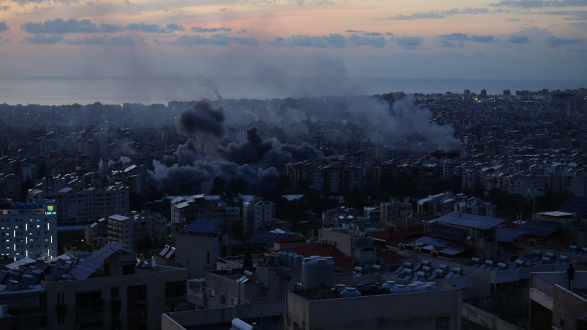
Now entering its second month, the war in Iran, sparked by large-scale U.S. and Israeli strikes in late February 2026, has escalated into a sustained regional confrontation with global consequences. Recent developments include intensified missile exchanges, continued U.S. strikes on Iranian infrastructure, and Iran's retaliatory drone and missile attacks across the Middle East, underscoring the conflict's widening scope and volatility. The war shows little sign of resolution, with stalled diplomatic efforts, rising oil prices linked to disruptions in the Strait of Hormuz, and mounting casualties on all sides. While diplomatic efforts and tentative peace talks have emerged, they have yet to produce a breakthrough, underscoring the challenges of de-escalation amid ongoing hostilities.
On Monday, April 20, at 11 am PT, the Pacific Council invites you to join us for our continued coverage on the Iran War, exploring key dynamics shaping the conflict, including Iran's demonstrated military resilience, the growing risk of regional spillover, and implications for U.S. foreign policy and global stability. Members will hear from Alan Eyre, Distinguished Diplomatic Fellow at the Middle East Institute and the Founder & President of EyreAnalytics LLC, Jonathan Shrier, Former Deputy Chief of Mission at the U.S. Embassy in Jerusalem, and Dr. Jerrold D. Green, Senior Fellow at the UCLA Burkle Center for International Relations and President Emeretus & Middle East and South Asia Senior Fellow at the Pacific Council.
Why it's important:
- U.S. Central Command (CENTCOM) declared it would block all ships entering or exiting Iranian ports and coastal areas, marking a major escalation in economic and military pressure on Iran.
- The U.S. brokered a temporary ceasefire between Israel and Lebanon, aimed at pausing parallel fighting linked to the Iran war and creating space for broader diplomacy. While Israel agreed to the truce, it plans to maintain a military presence in southern Lebanon, and Hezbollah has signaled conditions for compliance.
- Experts speculate that the war in Iran is likely to produce a restructured Middle East in which proxy groups are weaker, more autonomous, and less reliably aligned with Tehran's central command, reshaping long-term regional competition.
To register for this webinar, visit the Zoom Registration Page.
Guest Speaker
Alan Eyre is a Distinguished Diplomatic Fellow at the Middle East Institute. He retired from the US Foreign Service in September 2023 after a 40-year government career.
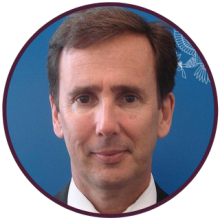
Most of Alan’s government service related to the MENA region, with a focus on Iran. He was the sole US career diplomat to be a core member of the US nuclear negotiating team from its 2010 start to the 2015 Joint Comprehensive Plan of Action (JCPOA) agreement with Iran, serving as the team’s Iran subject matter expert and also as the State Department’s first Persian Language Spokesperson. He was also the first US diplomat to serve in the political section of the newly reopened US Embassy Kabul in late 2001. In addition, he served as Director of the Iran Regional Presence Office at US Consulate Dubai, the State Department’s main field office for monitoring Iran. His overseas tours include Nigeria, Syria, the UAE (twice), Azerbaijan, the United Kingdom, and Jordan, where in his final tour he served as Political Counselor. His only Washington assignment was as Director of the Office for Middle East and Asia in the Bureau of Energy Resources.
Guest Speaker
Jonathan Shrier is a former senior U.S. foreign policy and economic diplomacy leader with more than three decades of experience across the Department of State, the National Security Council, and international postings worldwide. Most recently, he served as U.S. Deputy Representative to the United Nations Economic and Social Council in New York from 2023 to 2025, following his tenure as Deputy Chief of Mission at the U.S. Embassy in Jerusalem from 2019 to 2022. Earlier, he was Economic Counselor at the U.S. Embassy in Tel Aviv, where he advanced U.S.-Israel economic cooperation and regional economic initiatives. His overseas leadership also includes serving as Consul General in Peshawar, Pakistan, and as Principal Deputy in Kabul, Afghanistan, where he coordinated multi-agency efforts supporting reconstruction and development.
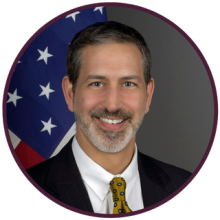
In Washington, Shrier held several senior policy roles, including Acting Special Representative for Global Food Security at the Department of State, where he led U.S. diplomatic efforts on global hunger and nutrition and supported the Feed the Future initiative. He also served as Director for International Energy Security at the National Security Council and as Acting Assistant Secretary for Policy and International Affairs at the Department of Energy, shaping U.S. policy on climate, energy, and international economic issues. Earlier in his career, he worked at the Office of the U.S. Trade Representative and at the U.S. Embassy in Beijing, focusing on investment, trade, and political affairs.
Moderator
Dr. Jerrold D. Green is the Global Advisor to the Cedars-Sinai Medical Center and a Senior Fellow at the UCLA Burkle Center for International Relations. He is the President Emeritus of the Pacific Council on International Policy where he serves as the Senior Fellow for the Middle East and South Asia and as member of the Board of Directors. Green was a Partner at Best Associates in Dallas, Texas, a merchant banking firm with global operations. He also occupied senior management positions at the RAND Corporation where he was awarded the RAND Medal for Excellence. Dr. Green has a B.A. (summa cum laude) from the University of Massachusetts/Boston, as well as an M.A. and Ph.D. in Political Science from the University of Chicago. His academic career began at the University of Michigan and he subsequently joined the University of Arizona where he became a Professor of Political Science and Sociology as well as Director of the Center for Middle Eastern Studies. He also served as a Research Professor of Communication, Business, and International Relations at the University of Southern California.
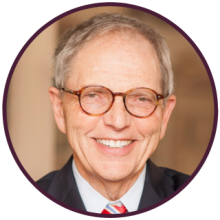
Green has lived and worked in Egypt, where he was a Fulbright Fellow, Iran, and Israel. He has been a visiting fellow at the Chinese Academy of Social Science's West Asian Studies Center in Beijing; a visiting lecturer at the Havana based Center for African and Middle East Studies (CEAMO), a fellow at the Australian Defense College, and delivered papers at conferences sponsored by the Iranian Institute of International Affairs in Tehran. Dr. Green led three U.S. Department of Defense sponsored fact-finding delegations to Afghanistan, one to Iraq, and has served as an observer at the legal proceedings at Guantanamo Bay, Cuba, conducted by the U.S. Department of Defense.
To register for this webinar, visit the Zoom Registration Page.