U.S. - China Strategic Competition in Asia
December 9, 2026
6:00pm
Santa Monica, CA
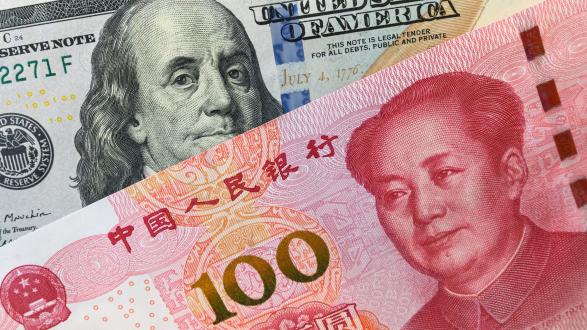
As strategic competition between the United States and China continues to shape the Indo-Pacific, countries across Asia are navigating an increasingly complex geopolitical and economic environment. From competition over critical port infrastructure and maritime access to technological development, supply chains, and trade relationships, the region has become central to broader questions of economic security, regional stability, and the future of the international order. Drawing on her experience serving as a U.S. diplomat across South, Southeast, and Northeast Asia, Ambassador (ret.) Julie Chung will offer a firsthand perspective on how regional governments are responding to U.S.-China competition, the challenges and opportunities facing American partnerships across Asia, and the role of diplomacy in advancing U.S. interests throughout the Indo-Pacific.
Join the Pacific Council on Wednesday, December 9, from 6 - 8 pm PT for an in-person fireside chat featuring Ambassador (ret.) Julie Chung, who will share her firsthand diplomatic experiences across South, Southeast, and Northeast Asia. Ambassador (ret.) Kristina Kvien, President & CEO of the Pacific Council, will moderate the conversation, exploring the implications of U.S.-China strategic competition for the Indo-Pacific, including maritime security, strategic infrastructure, technology, trade, and the future of U.S. engagement across the region.
Why it's important:
- The South China Sea is critical to global trade and regional economic security. According to a July 2026 analysis by the Center for Strategic and International Studies (CSIS), trillions of dollars in goods move through the South China Sea each year, making it one of the world's most consequential maritime corridors. The region's strategic chokepoints are particularly vulnerable to geopolitical tensions, and disruptions could have significant consequences for international shipping, supply chains, and the global economy
- China's overseas port investments are reshaping the strategic landscape of maritime infrastructure. A July 2026 Council on Foreign Relations analysis tracks 145 overseas port projects involving Chinese investment or operational interests, examining their commercial significance and potential dual-use applications. As Washington and Beijing compete for influence across the Indo-Pacific and beyond, port infrastructure, shipping access, and maritime connectivity have become increasingly important considerations for regional security and economic partnerships
- The U.S.-China technology competition has significant implications for Taiwan and global supply chains. Competition over artificial intelligence is increasing Taiwan's strategic importance, particularly given its central role in advanced semiconductor manufacturing. Analysis by the Council on Foreign Relations highlights the interconnectedness of technology, economic security, and regional stability, illustrating how developments in the Taiwan Strait could affect American technological leadership and the broader global economy.
Seating is very limited. To register, please email events@pacificcouncil.org.
Speakers include:
- Ambassador (ret.) Julie Chung, former U.S. Ambassador to Sri Lanka (2022-2026)
- Ambassador (ret.) Kristina Kvien, President & CEO, Pacific Council on International Policy
Guest Speaker
Ambassador Julie Chung is a distinguished fellow jointly affiliated with the Indo-Pacific Security Initiative of the Atlantic Council’s Scowcroft Center for Strategy and Security and Rafik Hariri Center & Middle East programs. She is the vice president for strategy and global affairs at ISC2, a leading global cybersecurity consortium. She is also a senior advisor for the Krach Institute for Tech Diplomacy at Purdue University and a member of its advisory council.
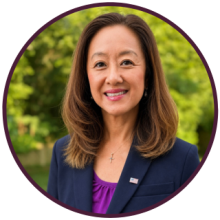
An experienced US diplomat who has worked on key foreign policy and national security challenges across the Indo-Pacific and Latin America for three decades, Chung has been a leader in expanding trade, defense cooperation, and trusted technology. Before joining the Atlantic Council, she was the ambassador to Sri Lanka from 2022 to 2026, strengthening maritime security partnerships in close coordination with Quad partners.
Chung served as acting assistant secretary and principal deputy assistant secretary of state for the State Department’s Bureau of Western Hemisphere Affairs from 2019 to 2021. Prior to that, she was director of the Office of Japanese Affairs. She traveled to North Korea numerous times between 2001 and 2003 as a key member of the Korean Economic Development Organization negotiations with North Korea. She also served as special assistant on Asia to Deputy Secretary Richard Armitage in 2003. Her other postings include Vietnam, Thailand, Cambodia, Japan, China, Colombia, and Iraq as chief of staff for the coordination of civilian-military foreign assistance.
Chung holds a BA from the University of California, San Diego and an MA from Columbia University. She is the recipient of the Presidential Rank Award for leading repatriation efforts of US citizens during COVID-19 and the State Department’s Distinguished Honor Award.
Ambassador Kristina A. Kvien assumed the role of President and CEO of Pacific Council in March, 2026.

Previously, she spent over three decades as a Foreign Service Officer with the U.S. Department of State. She retired as a career member of the Senior Foreign Service with the rank of Minister Counselor. From 2023-2026, she served as the tenth U.S. Ambassador to the Republic of Armenia. From 2019-2022, she served as the Charge d’Affaires at the U.S. Embassy Ukraine, leading evacuation of the Embassy shortly before Russia’s further invasion in 2022 and return to the Embassy in May 2022. For her work in Ukraine, Ambassador Kvien received the Ryan C. Crocker Award for Outstanding Leadership in Expeditionary Diplomacy.
Ambassador Kvien has dedicated her career to deepening U.S. relations with Europe and Southeast Asia. She served as Acting Deputy Chief of Mission and Minister Counselor for Economic Affairs at U.S. Embassy Paris; Acting Deputy Chief of Mission and Economic Counselor at U.S. Embassy Bangkok; Economic Counselor at U.S. Embassy London; and Director for European Union, Ukraine, and Belarus Affairs at the National Security Council in the Executive Office of the President. Ambassador Kvien earlier served at U.S. Embassy Moscow; the U.S. Mission to the European Union in Brussels; U.S. Embassy Manila; and Washington DC, where she worked on European Union issues and bilateral relations with Slovenia.
Ambassador Kvien was born and raised in California, with a BA in Political Science from Occidental College and an MS in Strategic Studies from the U.S. Army War College. Prior to joining the Foreign Service, she worked in the Sales Presentation Department at the Los Angeles Times.
Seating is very limited. To register, please email events@pacificcouncil.org.