U.S.-Cuba Relations: Maximum Pressure and a Nation on the Edge
September 16, 2026
10:00am
Webinar
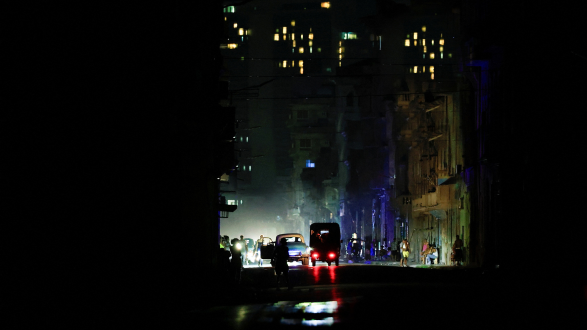
Under the Trump administration's second term, Washington has reverted to a posture of maximum pressure, reinstating Cuba's designation as a State Sponsor of Terrorism, tightening travel and remittance restrictions, and imposing targeted sanctions on senior Cuban officials. A January 2026 executive order declared the Cuban government an unusual and extraordinary threat to U.S. national security and threatened tariffs on any country supplying Cuba with oil, cutting off Venezuelan and Russian energy lifelines. The result is a country experiencing its worst humanitarian conditions in decades, with nationwide blackouts lasting more than 70 hours, chronic shortages of food and medicine, and street protests as Cubans take to the cacerolazo to voice collective discontent.
On Wednesday, September 16, at 10 am PT, the Pacific Council invites you to join a conversation examining the forces driving Cuba's deepening crisis and the implications of U.S. policy choices for the island's future. Speakers will discuss the humanitarian and political consequences of Washington's maximum pressure campaign, how the closure of legal migration pathways is reshaping emigration patterns across Latin America, and what a more durable framework for U.S.-Cuba relations could look like going forward.
Why it's important:
- Cuba suffered three nationwide power blackouts in the first quarter of 2026 alone, leaving millions without electricity for days at a time. As the U.S. moves to intercept fuel tankers bound for Cuba and threatens secondary tariffs on supplier nations, the humanitarian fallout is intensifying, raising difficult questions about whether maximum pressure advances political change or entrenches suffering without strategic gain.
- With the Trump administration shutting down the last viable legal channels for Cubans to enter the United States, Cubans are increasingly turning to Brazil, Mexico, and other Latin American countries as destinations. Net Cuban migration into Brazil tripled in early 2026, signaling how U.S. immigration policy choices generate broader hemispheric consequences that regional partners must absorb.
- President Biden briefly rescinded Cuba's terrorism designation in January 2025 before Trump reinstated it on his first day in office, illustrating how Cuba policy remains a politicized flashpoint. A May 2026 White House fact sheet announcing new sanctions on Cuban officials underscores the administration's commitment to an approach that many foreign policy analysts contend has failed to produce democratic reform in over six decades of application.
Speakers include:
Dr. Michael J. Bustamante, Emilio Bacardí Moreau Chair in Cuban and Cuban-American Studies and Associate Professor of History, University of Miami
Dr. William LeoGrande, Professor Emeritus, School of Public Affairs, American University
Moderator: Dr. Richard D. Downie, Latin America Senior Fellow, Pacific Council on International Policy
To register for this webinar, visit the Zoom Registration Page.
Guest Speaker
Dr. Michael J. Bustamante (PhD, Yale University) is an Associate Professor of History and the Emilio Bacardí Moreau Chair in Cuban and Cuban-American Studies at the University of Miami. He is the author of Cuban Memory Wars: Retrospective Politics in Revolution and Exile (University of North Carolina Press, 2021). With Jennifer Lambe (Brown University), he is co-editor of The Revolution from Within: Cuba, 1959-1980 (Duke University Press, 2019). As of 2024, he is co-editor of the journal Cuban Studies.
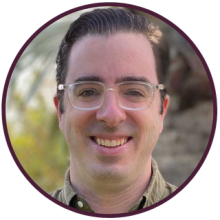
At UM, Dr. Bustamante serves as Director of Academic Programs at the Cuban Heritage Collection, the largest archival repository dedicated to Cuban materials outside of the island and the largest collection of materials on the Cuban diaspora in the world. In that capacity, he oversees fellowship and grant competitions, conferences, and other academic initiatives designed to activate the collection for scholarship and public conversations in the field of Cuban Studies. He simultaneously directs the undergraduate program in Cuban Studies in the College of Arts & Sciences and its affiliated academic minor.
Dr. Bustamante's scholarly writing has appeared in Cold War History, Journal of American Ethnic History, Latino Studies, Cuban Studies, Journal of Latin American Cultural Studies, Anthurium, and the Oxford Research Encyclopedia of American History. His commentary on contemporary Cuban affairs has been featured in Foreign Affairs, NACLA Report on the Americas, Slate, Financial Times, and The Washington Post, among other publications.
Prior to joining the faculty at the University of Miami, he served as Assistant Professor of Latin American History at Florida International University and Research Associate for Latin America Studies at the Council on Foreign Relations in Washington, D.C.
Guest Speaker
Dr. William LeoGrande, Professor Emeritus of Government and a specialist in Latin American politics and U.S. foreign policy toward Latin America, has frequently advised government and private sector agencies. He has written five books, including Our Own Backyard: The United States in Central America, 1977 – 1992. Most recently, he is coauthor of Back Channel to Cuba: The Hidden History of Negotiations between Washington and Havana.
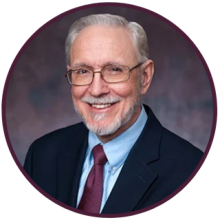
Previously, he served on the staffs of the Democratic Policy Committee of the United States Senate, and the Democratic Caucus Task Force on Central America of the United States House of Representatives. Professor LeoGrande has been a Council on Foreign Relations International Affairs Fellow and a Pew Faculty Fellow in International Affairs. His articles have appeared in various international and national journals, magazines, and newspapers.
Moderator
Dr. Richard D. Downie is a Senior Fellow for Latin America Studies at the Pacific Council on International Policy, an Adjunct Professor in the University of Southern California’s Global Security Studies Program, and Missouri State University’s Defense and Strategic Studies Program. He serves on the Boards of the World Hwa Rang Do Association and Westport Construction Incorporated and is a member of the Faculty of the Thayer Leader Development Group at the United States Military Academy. Dr. Downie is a member of the Council on Foreign Relations.
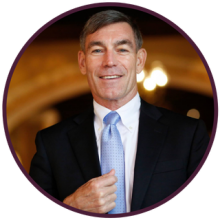
He has held several senior defense and academic leadership roles, helping to shape security and defense cooperation across the Western Hemisphere. In his last position in the U.S. Army, he served as the first Commandant of the Western Hemisphere Institute for Security Cooperation. Following retirement from the Army, he was Director of the William J. Perry Center for Hemispheric Defense Studies in Washington, D.C. for nine years. He is also the former President & CEO of the Los Angeles World Affairs Council--and previously, the World Affairs Council of Orange County.
A graduate of the United States Military Academy, Dr. Downie earned his Ph.D. in International Relations from the University of Southern California. He is a frequent commentator on international and hemispheric security affairs, appearing on CNN/Español, Univision, Telemundo, Bloomberg, NPR, NTN24, and other media outlets.
To register for this webinar, visit the Zoom Registration Page.