One Year After USAID: The Future of U.S. Humanitarian Aid
August 27, 2026
3:00pm
Webinar
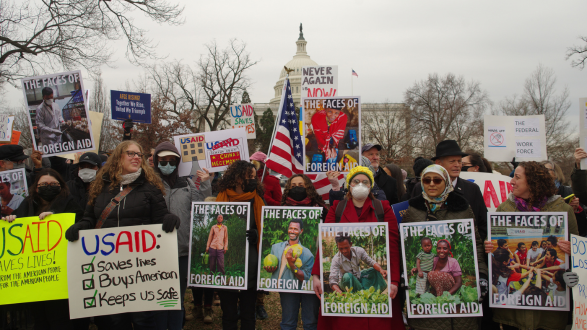
One year after its closure, the consequences of dismantling USAID are still unfolding. On Thursday, August 27, at 3 pm PT, the Pacific Council is hosting a conversation to examine the uncertain future of American humanitarian assistance abroad. Formally dissolved on July 1, 2025, USAID was systematically dismantled over the following year, with its remaining initiatives absorbed into the State Department – ending nearly six decades of U.S. humanitarian leadership. The discussion will assess what has been lost, what has changed, and what comes next for U.S. foreign aid architecture.
Central to that examination is how Washington's retreat from multilateral humanitarian leadership has reshaped global aid networks, strained longstanding partnerships, and opened space for new actors to fill the void. At the heart of that shift is a fundamental redesign of the American aid model – one that is leaner, bilateral, and increasingly tied to trade, investment, and measurable returns, with funding flowing government-to-government and the NGO-contractor layer significantly reduced.
Speakers include:
- Tyler Beckelman, Nonresident Scholar, Africa Program, Carnegie Endowment for International Peace
- Dr. Ebenezer Obadare, Douglas Dillon Senior Fellow for Africa Studies, Council on Foreign Relations
- Michael Schiffer, Associate Fellow, Technology, Trade and Geopolitics Program at the International Institute for Strategic Studies
- Moderator: Sam Vigersky, International Affairs Fellow, Council on Foreign Relations
Why it's important:
- Prior to its closure, USAID disbursed roughly $68 billion in foreign aid in 2024, accounting for over 40% of total global humanitarian aid, including support for flagship programs like PEPFAR, which has saved 26 million lives across 55 countries. U.S. foreign aid spending fell to $32 billion in 2025, less than half of the prior year's total, leaving vast gaps in health, food security, and disaster response worldwide.
- According to the Harvard Humanitarian Initiative, the global humanitarian sector now faces a period of sustained, structural disruption. Some believe this is not simply a funding gap, but a reordering of the political economy of humanitarianism and a deep contestation of its legitimacy.
- In May 2026, the UN's $47 billion 2025 Global Humanitarian Appeal was only 35.1% funded. Private philanthropy is unlikely to bridge the divide: charitable giving to international causes totaled $35 billion in 2024 and would need to more than double to compensate for the reduction in government spending.
To register for this webinar, visit the Zoom Registration Page.
Guest Speaker
Tyler Beckelman is a nonresident scholar with the Carnegie Endowment for International Peace's Africa Program. His work focuses on commercial diplomacy and trade and investment policy.
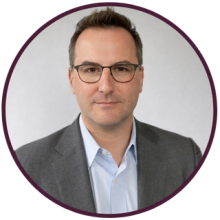
He brings more than 20 years of experience across the public and private sectors. Most recently, he served as deputy assistant secretary for textiles, consumer goods, materials, critical minerals, and metals at the International Trade Administration in the U.S. Department of Commerce, where he coordinated trade and supply chain policy and analysis, administered trade preference programs, and led engagement with industry and other stakeholders. Previously, he served as deputy assistant administrator for East and Central Africa in USAID’s Bureau for Africa, director of international partnerships at the U.S. Institute of Peace, and senior advisor at WestExec Advisors, a leading strategic advisory firm.
From 2012 to 2013, Tyler served on the National Security Council, where he coordinated U.S. policy toward 15 countries in East and Southern Africa, advised senior officials, and contributed to the development and implementation of the Obama administration's Africa initiatives. He has also directed USAID’s Somalia field office, served as a senior advisor in USAID's Office of Transition Initiatives and Bureau for Resilience and Food Security, and oversaw humanitarian assistance delivery in East and Southern Africa.
Tyler holds a B.A. in political science, international studies, and economics from Macalester College and a M.A. in government from Georgetown University.
Guest Speaker
Dr. Ebenezer Obadare is Douglas Dillon senior fellow for Africa studies at the Council on Foreign Relations (CFR). Before joining CFR, he was professor of sociology at the University of Kansas, Lawrence. He is also a senior fellow at the New York University School of Professional Studies Center for Global Affairs, as well as a fellow at the University of South Africa’s Institute of Theology. Author of numerous works on civil society and the state, and religion and politics in Africa, his most recent book, published by the University of Notre Dame Press, is titled Pastoral Power, Clerical State: Pentecostalism, Gender, and Sexuality in Nigeria. His forthcoming book, The Nigerian Paradox, will be published by Oxford University Press.
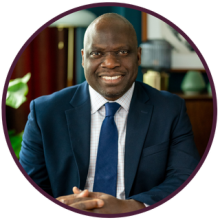
Obadare was Ralf Dahrendorf Scholar and Ford Foundation International Scholar at the London School of Economics and Political Science where he completed his PhD in social policy in 2005. He holds a BA in history and an MSc in international relations from the Obafemi Awolowo University, Ile-Ife, Nigeria.
Obadare was a political reporter for The News and TEMPO magazines from 1993 to 1995, and a lecturer in international relations at the Obafemi Awolowo University from 1995 to 2001. His primary areas of interest are civil society and the state, and religion and politics in Africa.
He is the author and editor of numerous books, including Christianity, Sexuality and Citizenship in Africa (2019), Pentecostal Republic: Religion and the Struggle for State Power in Nigeria (2018), Governance and the Crisis of Rule in Contemporary Africa: Leadership in Transformation (2016), Humor, Silence, and Civil Society in Nigeria (2016), The Handbook of Civil Society in Africa (2014), Civic Agency in Africa: Arts of Resistance in the 21st Century (2014), Democracy and Prebendalism in Nigeria: Critical Interpretations (2013), and Nigeria at Fifty: The Nation in Narration (2011).
Obadare’s essays have appeared in the leading Africanist and disciplinary journals, including the Review of African Political Economy (ROAPE), African Affairs, Politique Africaine, Journal of Civil Society, Democratization, Patterns of Prejudice, Africa Development, Africa, Critical African Studies, Development in Practice, Journal of Modern African Studies, Journal of Contemporary African Studies, Interkulturelle Theologie, and Journal of Church and State.
He has written for Foreign Affairs, The Wall Street Journal, The New York Times, The National Interest, Foreign Policy, The Globe and Mail, and other prestigious outlets.
He was the editor of Journal of Modern African Studies and is contributing editor of Current History.
Guest Speaker
Michael Schiffer is a partner at Scalare Advisors, a senior fellow at the Center for American Progress, an associate fellow in the Trade, Technology and Geopolitics program at the International Institute for Strategic Studies and a distinguished senior fellow at the Sasakawa Peace Foundation USA. He most recently served as the assistant administrator for Asia at the U.S. Agency for International Development, was senior advisor and counselor on the Democratic staff of the Senate Foreign Relations Committee, and earlier served as deputy assistant secretary of defense for East Asia. Schiffer has also served as legislative director to Senator Dianne Feinstein and he has held roles at the Stanley Foundation, as a Council on Foreign Relations Hitachi International Affairs Fellow in Japan, at the Center for War Peace and the News Media at New York University, and as co-manager of the Poipu Bed and Breakfast Inn in Kauai.
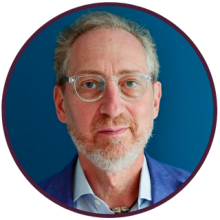
Moderator
Sam Vigersky is an international affairs fellow at the Council on Foreign Relations. His research and scholarship focus on humanitarian interventions, UN reform, and public-private partnership in crisis response. Vigersky has over two decades of experience as a humanitarian practitioner and policymaker covering Africa, Europe, the Middle East, and the Western Hemisphere.
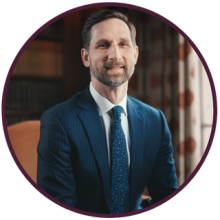
Previously he was the senior humanitarian advisor to the U.S. ambassador to the United Nations, where he led humanitarian policy and resolution negotiations in the UN Security Council and General Assembly. Vigersky worked in the U.S. Agency for International Development’s Office of Foreign Disaster Assistance from 2014 to 2019, developing and managing programs across two dozen countries. He led U.S. disaster assistance response teams in Liberia and Sierra Leone during the West Africa Ebola outbreak, the Ethiopia famine response, and the Boko Haram complex emergency in northeast Nigeria.
Prior to joining the federal government, Vigersky worked at the Pan American Health Organization/World Health Organization (PAHO/WHO) and was based in Port-au-Prince, Haiti, following the 2010 earthquake and cholera outbreak. He has worked domestically at the Department of Health in Washington, DC; the University of Michigan; and the American Red Cross. Vigersky holds a BA from Reed College and a MSW from the University of Michigan.
To register for this webinar, visit the Zoom Registration Page.