Venezuela's Economic and Energy Outlook
June 4, 2026
9:00am
Webinar
Venezuela is at a critical inflection point. Vast energy resources and renewed international attention stand in contrast to deep institutional weaknesses that continue to constrain recovery. Whether the country moves toward sustainable growth will depend on its ability to transition from a discretionary system to one grounded in democratic governance and the rule of law. Under Interim Venezuela President Delcy Rodríguez's current framework, the oil sector remains characterized by weak contract enforcement, high state discretion, and limited credibility, deterring large-scale investment and constraining production.
The Pacific Council, in partnership with Espacio Crítico, is hosting a webinar on Thursday, June 4, at 9 am PT to explore Venezuela's economic and oil sectors in the aftermath of Maduro's capture earlier this year. The conversation will highlight how restoring the rule of law, strengthening democratic governance, and establishing clear, enforceable rules could unlock long-term capital and enable sustainable growth for the country. Participants will hear from Francisco Monaldi, Wallace S. Wilson Fellow in Latin American Energy Policy and Director, Latin America Energy Program, Baker Institute for Public Policy, Rice University; Gustavo García, Coordinator of María Corina Machado’s Economic Team, Former Principal Technical Lead & Fiscal Economist, Inter-American Development Bank; Marianna Parraga, Energy Correspondent, Latin America Reuters; and Miguel Pizarro, Director of Espacio Crítico.
Why it's important:
- Venezuela's economy is heavily reliant on oil, accounting for 80% of the country's exports and more than 17% of its Gross Domestic Product.
- On January 6, President Trump announced that the United States would sell between 30 and 50 million barrels of seized Venezuelan oil. The following day, the Department of Energy stated that Energy Secretary Chris Wright was coordinating with "interim Venezuelan authorities" to carry out the sale and support efforts to modernize the country's energy sector.
- IMF estimates put Venezuela's public debt at about 180% of GDP, even before accounting for additional liabilities from court judgments or arbitration arising from past defaults.
To register for this webinar, visit the Zoom Registration Page.
Guest Speaker
Gustavo García is a Venezuelan economist specializing in macroeconomics, fiscal policy, and public finance in Latin America. He currently serves as Coordinator of María Corina Machado’s Economic Team and previously held the position of Principal Technical Lead Fiscal Economist at the Inter-American Development Bank (IDB), where he worked on fiscal reforms and public sector modernization initiatives across the region.
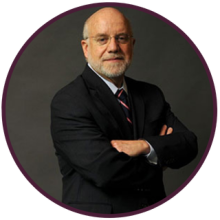
He has also served as an economist at the International Monetary Fund and held senior economic policy positions within the Venezuelan government, including Chief Economist at the Ministry of Finance. In academia, he has taught at IESA School of Management and was a visiting professor at the University of Oxford.
His work focuses on economic policy, fiscal sustainability, and institutional reform in Latin America.
Guest Speaker
Francisco J. Monaldi is a leading expert on the political economy of energy in Latin America and serves as Director of the Latin America Energy Program at Rice University’s Baker Institute for Public Policy. His work focuses on oil markets, energy policy, natural resource governance, and the economic challenges facing energy-producing countries.
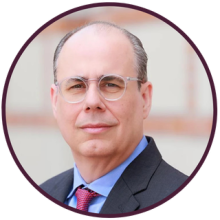
Over the course of his career, he has held academic and research appointments at institutions including Harvard University, Stanford University, Columbia University, and the Hoover Institution. He has also advised international organizations, governments, and major energy companies, including the IMF, World Bank, Inter-American Development Bank, Shell, Chevron, and Saudi Aramco.
Professor Monaldi is widely recognized for his analysis of Venezuela's oil industry and broader global energy trends.
Guest Speaker
Marianna Parraga is a Venezuelan journalist and Reuters energy correspondent based in Houston, Texas. She specializes in Latin American oil markets and is internationally recognized for her coverage of Venezuela’s energy sector.

With nearly two decades of experience in economic and energy journalism, she has reported extensively on PDVSA, international sanctions, crude exports, and the geopolitical dynamics shaping the regional energy market. Before joining Reuters, she worked for leading Venezuelan newspapers, including El Nacional and El Universal.
She is also the author of Oro Rojo, a book focused on Venezuela’s oil industry.
Moderator
Miguel Pizarro is a Venezuelan activist with extensive experience in human rights, international advocacy, and strengthening civil society in contexts of democratic backsliding. Throughout his career, he has worked closely with civil society organizations, multilateral bodies, governments, cooperation agencies, and international organizations to raise awareness of the Venezuelan crisis, promote the protection of fundamental rights, and seek solutions to the humanitarian emergency.
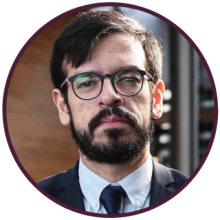
He was elected deputy to the National Assembly of Venezuela in 2010, at the age of 21, and was re-elected in 2015, representing one of the largest popular neighborhoods (barrios) in Latin America. Since 2019, he has held various positions as a representative to the United Nations (UN) and in the area of foreign relations.
His experience in international coordination has been key to promoting measures against those responsible for human rights violations, channeling humanitarian aid, and advancing accountability mechanisms in forums such as the UN, the Organization of American States, and the International Criminal Court. He has actively participated in the drafting and follow-up of resolutions on Venezuela at the UN Human Rights Council, as well as in monitoring initiatives linked to the humanitarian emergency and the progressive shrinking of civic space in the country.
His experience in advocacy, political strategy, and international cooperation has made him a central figure in the fight against authoritarianism and in the search for solutions in crisis contexts.
To register for this webinar, visit the Zoom Registration Page.