Venezuela After January 3rd: An Update
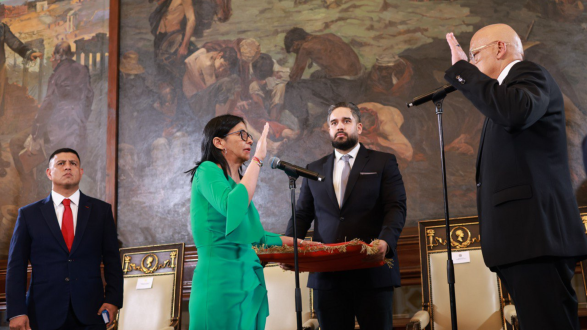
via Presidencia de Venezuela
February 26, 2026
9:00am
Webinar
Political developments following the U.S. execution of "Operation Absolute Resolve" on January 3rd mark a new phase in Venezuela's prolonged political crisis. With institutions hollowed out, authority fragmented, and limited state capacity, political actors are facing contested legitimacy, weak enforcement mechanisms, and persistent governance and security risks. These conditions present real consequences for regional stability, migration, energy markets, sanctions policy, and diplomatic norms. At the same time, unresolved questions of political persecution, human rights, and accountability complicate any path toward normalization, making the sequencing of power, justice, and reconstruction a central strategic challenge.
On Thursday, February 26, at 9 am PT, the Pacific Council, in partnership with Espacio Crítico, will convene leading voices from Venezuela's democratic opposition and the human rights and international law communities to assess what comes next. This discussion will examine plausible political scenarios, key governance constraints, and the human rights and accountability considerations likely to shape the months ahead. Members will hear from Génesis Dávila, Founder of Defiende Venezuela; Freddy Guevara, Democracy Visiting Fellow at the Harvard Kennedy School, and Former Deputy of the National Assembly of Venezuela; Dr. Paola Bautista de Alemán, Hewlett Visiting Fellow for Public Policy at the Kellogg Institute for International Studies at the University of Notre Dame; and Miguel Pizarro, Director of Espacio Crítico.
Why it's important:
- The Trump administration is working with Mr. Maduro's former vice president and successor, Delcy Rodríguez. Over the past month, Ms. Rodríguez reoriented Venezuela's crude oil exports to the United States and rewrote the country's oil law to bring in American investment.
- There is debate over whether Venezuela is truly in a period of transition following Maduro's removal, with some expressing skepticism about whether the government will hold elections in the near future and whether Delcy Rodríguez, in her role as acting president, is seeking to extend constitutional deadlines indefinitely to remain in power.
- To date, the U.S. military has seized seven Venezuelan oil tankers. And the U.S. is selling Venezuelan oil through two Swiss oil trading firms, both of which pled guilty to paying bribes in the past.
To register for this webinar, visit the Zoom Registration Page.
Guest Speaker
Dr. Paola Bautista de Alemán is a political scientist, democracy scholar, and civic leader with over twenty years of experience working under authoritarian rule. Her research focuses on democratic resilience, opposition strategy, and political backsliding, with Venezuela as a central case within broader comparative debates on competitive authoritarianism. She has published in the Journal of Democracy and other leading outlets, contributing to international discussions on authoritarian survival and democratic resistance.
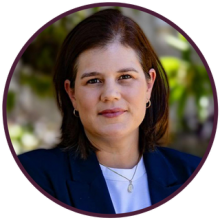
She is currently Hewlett Visiting Fellow for Public Policy at the Kellogg Institute for International Studies at the University of Notre Dame, where she is conducting research on political resilience in authoritarian regimes and preparing a book manuscript on non-democratic systems. Since March 2025, she has lived in exile in the United States.
In 2005, she founded the Institute of Political Studies FORMA, a nationwide platform for democratic education that has trained more than 30,000 activists. She also serves as National Vice President for Training and Programs of Primero Justicia. She holds a PhD in Political Science (Dr. rer. pol., cum laude) from the University of Rostock and received the 2022 Fernando Coronil Prize (Honorable Mention, LASA).
Guest Speaker
Génesis Dávila is a Venezuelan lawyer and founder of Defiende Venezuela, an NGO dedicated to advancing justice through international human rights litigation. Under her leadership, Defiende Venezuela achieved a landmark ruling from the Inter-American Court of Human Rights that restored the Court’s jurisdiction over Venezuela in the case Salamanca Chirinos et al. v. Venezuela—reopening the doors of justice for Venezuelan victims across the region.
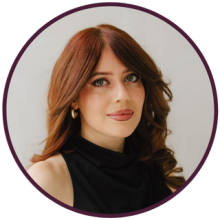
Through strategic litigation, Dávila has represented more than 2,000 victims before international bodies and courts, worked with the United Nations and the Inter-American Commission on Human Rights, and advised the Organization of American States on crimes against humanity in Venezuela.
She has also trained advocates from authoritarian regimes and has been featured in leading media outlets, including CNN, The Washington Post, NPR, Voice of America, BBC, and The New York Times. Dávila is the co-author of Pathway to Justice: Handbook for the Liberation of Political Prisoners.
Guest Speaker
Freddy Guevara Cortez is a freedom fighter and researcher focused on strengthening democratic movements in an era of authoritarian resilience. He is the former Vice President of Venezuela’s National Assembly and has faced political persecution, imprisonment, and exile as a result of his democratic activism.
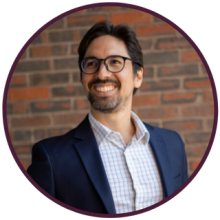
He combines active engagement as part of Venezuela’s opposition leadership with academic and global advocacy work aimed at strengthening pro-democracy movements worldwide. Guevara is currently a Democracy Fellow at Harvard University’s Ash Center for Democratic Governance and Innovation and a researcher at the Nonviolent Action Lab, where he collaborates with Erica Chenoweth on research and applied strategy development for pro-democracy movements. He is also research coordinator at the World Liberty Congress Academy, supporting global learning, training, and strategic exchange among democracy leaders.
His work centers on civil resistance, comparative authoritarianism, and the role of emerging technologies in democratic struggle. Across these roles, he is advancing the creation of a global counter-autocracy knowledge network that connects researchers, strategists, and activists, bridging academic research with frontline experience and international collaboration.
Moderator
Miguel Pizarro is a Venezuelan activist with extensive experience in human rights, international advocacy, and strengthening civil society in contexts of democratic backsliding. Throughout his career, he has worked closely with civil society organizations, multilateral bodies, governments, cooperation agencies, and international organizations to raise awareness of the Venezuelan crisis, promote the protection of fundamental rights, and seek solutions to the humanitarian emergency.
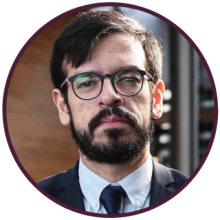
He was elected deputy to the National Assembly of Venezuela in 2010, at the age of 21, and was re-elected in 2015, representing one of the largest popular neighborhoods (barrios) in Latin America. Since 2019, he has held various positions as a representative to the United Nations (UN) and in the area of foreign relations.
His experience in international coordination has been key to promoting measures against those responsible for human rights violations, channeling humanitarian aid, and advancing accountability mechanisms in forums such as the UN, the Organization of American States, and the International Criminal Court. He has actively participated in the drafting and follow-up of resolutions on Venezuela at the UN Human Rights Council, as well as in monitoring initiatives linked to the humanitarian emergency and the progressive shrinking of civic space in the country.
His experience in advocacy, political strategy, and international cooperation has made him a central figure in the fight against authoritarianism and in the search for solutions in crisis contexts.
To register for this webinar, visit the Zoom Registration Page.