What the “Blue Wave” Means for U.S. Foreign Policy
November 9, 2026
12:30pm
Webinar
The 2026 U.S. midterm elections took place against a backdrop of economic uncertainty, rising consumer costs, and growing debate over the United States’ role abroad. Widely seen as a referendum on the second Trump administration, the elections resulted in a significant victory for Democrats, who gained control of both the House of Representatives and the Senate. While the outcome reflects voters’ concerns over affordability, inflation, and the cost of living, the administration’s handling of international affairs was an important sub-plot, as voters perceive growing connections between U.S. foreign policy, our strained alliances, and Americans’ everyday lives. With Democrats now controlling both chambers of Congress, we can expect a stronger Congressional voice on policies toward Iran, Russia/Ukraine, NATO, China, and beyond. We can also see greater pushback on directions for foreign assistance, defense, and diplomatic and national security appointments. But how much influence can Congress assert on foreign policy, and what tools might lawmakers use to project power?
War in Iran, expanding Russian aggression, fracturing alliances - how will the “blue wave” impact today’s defining challenges in U.S. foreign policy? Tune in on Monday, November 9 at 12:30 pm PT for the Pacific Council’s webinar with Damian Murphy, Senior Vice President for National Security and International Policy at Center for American Progress with 15 years experience working foreign policy issues in the United States Senate. Ambassador (ret.) Kristina Kvien, President & CEO of the Pacific Council, wIll lead the discussion on the foreign policy implications of the midterm elections and how the new balance of power in Washington may influence the country’s global priorities moving forward.
Why it's important:
- Americans are increasingly connecting foreign policy decisions to their household finances. A Chicago Council on Global Affairs survey found that 86% of Americans believe the Iran war has negatively affected the cost of living, while 81% say tariffs have negatively affected household costs.
- Tariffs and trade policy is another major economic concern for voters at the polls. According to the Tax Policy Center in September, tariffs under current law will impose an average burden of about $920 per U.S. household in 2026.
- Democratic control of Congress will reshape the administration’s ability to advance its foreign policy agenda. With Democrats holding majorities in both chambers, congressional leaders will have greater authority to hold hearings, influence federal spending, and shape legislation concerning the war in Iran, policies towards Ukraine, defense spending, and foreign assistance.
To register for this webinar, visit the Zoom Registration Page.
Speakers include:
- Damian Murphy, Senior Vice President, National Security and International Policy, Center for American Progress
- Ambassador (ret.) Kristina A. Kvien, President & CEO, Pacific Council on International Policy
Guest Speaker
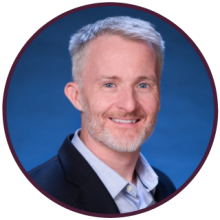
Damian Murphy is the senior vice president for National Security and International Policy at American Progress. He is also a lecturer in International Affairs at George Washington University. He has more than 25 years of international affairs experience as a chief policy adviser, program director, analyst, and political party trainer. Over the past 15 years in the Senate, he served in several foreign policy roles including as staff director of the U.S. Senate Committee on Foreign Relations and as the senior policy adviser for foreign policy, defense, and homeland security for Sen. Bob Casey (D-PA).
Prior to working on Capitol Hill, Murphy worked for more than a decade to advance the democratic process, human rights, and good governance abroad at the National Democratic Institute for International Affairs, Freedom House, and the Center for Democracy. Through these organizations, he trained democracy activists and human rights defenders throughout Central and Eastern Europe, the Middle East, Africa, and Asia. He lived in Belgrade, Serbia, after the fall of Slobodan Milošević, working with government officials, political activists, and civil society leaders to rebuild their country’s democratic institutions. While living in Nepal, he worked with civil society activists to identify strategies to reintegrate rebel fighters into society following the civil war. Domestically, Murphy served as the national field director for the U.S. Global Leadership Campaign, a coalition that advocates for U.S. engagement abroad and a robust international affairs budget. He has also volunteered on several political campaigns.
Murphy has a bachelor’s degree from the Catholic University of America and a master’s degree in international security studies from Georgetown University.
Moderator
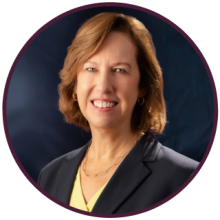
Ambassador Kristina A. Kvien assumed the role of President and CEO of Pacific Council in March, 2026.
Previously, she spent over three decades as a Foreign Service Officer with the U.S. Department of State. She retired as a career member of the Senior Foreign Service with the rank of Minister Counselor. From 2023-2026, she served as the tenth U.S. Ambassador to the Republic of Armenia. From 2019-2022, she served as the Charge d’Affaires at the U.S. Embassy Ukraine, leading evacuation of the Embassy shortly before Russia’s further invasion in 2022 and return to the Embassy in May 2022. For her work in Ukraine, Ambassador Kvien received the Ryan C. Crocker Award for Outstanding Leadership in Expeditionary Diplomacy.
Ambassador Kvien has dedicated her career to deepening U.S. relations with Europe and Southeast Asia. She served as Acting Deputy Chief of Mission and Minister Counselor for Economic Affairs at U.S. Embassy Paris; Acting Deputy Chief of Mission and Economic Counselor at U.S. Embassy Bangkok; Economic Counselor at U.S. Embassy London; and Director for European Union, Ukraine, and Belarus Affairs at the National Security Council in the Executive Office of the President. Ambassador Kvien earlier served at U.S. Embassy Moscow; the U.S. Mission to the European Union in Brussels; U.S. Embassy Manila; and Washington DC, where she worked on European Union issues and bilateral relations with Slovenia.
Ambassador Kvien was born and raised in California, with a BA in Political Science from Occidental College and an MS in Strategic Studies from the U.S. Army War College. Prior to joining the Foreign Service, she worked in the Sales Presentation Department at the Los Angeles Times.