Venezuela, U.S. Intervention, and the Crisis of International Law
January 22, 2026
8:00am
Webinar
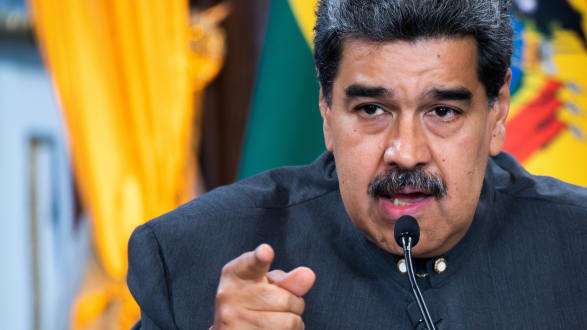
On January 3rd, 2026, the United States executed a complex military operation to capture Nicolás Maduro in Venezuela, now jailed in New York with his wife on drug trafficking charges. This dramatic action raises profound questions about U.S. policy, regional stability, and the future of Venezuelan democracy. Is this a genuine bid for democratic transition or a strategy to secure stability and access to Venezuela’s vast oil reserves? Can the United States dismantle criminal networks and armed militias without deploying troops on the ground? And what precedent does this intervention set for global powers such as China and Russia?
Join the Pacific Council on Thursday, January 22, at 8 am PT, to discuss the far-reaching implications of Washington’s intervention in Venezuela and its reluctance to support a transfer of power in the region. Members will hear from Ronna Rísquez, Venezuelan Investigative Journalist & Author, Seth Stodder, Lecturer in Law at USC Law School, and Former Assistant Secretary of Homeland Security for Border, Immigration & Trade Policy, and Dr. Richard Downie, Latin America Senior Fellow at the Pacific Council.
Why it’s important:
- Maduro’s removal came after months of the U.S. building a military presence off Venezuela's coast.
- President Trump indicated that the country’s oil wealth was a key factor in both his decision to attack, but also in pledging that the United States would “run” Venezuela for the foreseeable future.
- This intervention is raising questions about the future relevance and authority of international law and multilateral institutions worldwide.
Please send questions in advance to events@pacificcouncil.org.
To register for this webinar, visit the Zoom Registration Page.
Guest Speaker
Ronna Rísquez is an investigative journalist from Venezuela. For more than 20 years, she has reported on organized crime, prisons, citizen security, migration, and human rights.
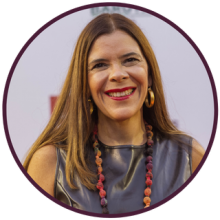
Her revealing reports on gangs, drug trafficking, and police violence have exposed her country's criminal dynamics and links to political power. Her work has been recognized with the Premio Rey de España (The King of Spain Prize) and other journalistic awards such as the Gabriel García Márquez Award, the Global Shining Light Award and the Javier Valdez Award.
Ronna is also the author of the book El Tren de Aragua: La banda que revoluciona el crimen organizado en América Latina (The Aragua Train: The Gang Revolutionizing Organized Crime in Latin America). This journalistic piece is the result of more than five years of research. It uncovers the existence of a Venezuelan prison gang that expanded to several countries in the Americas and later became the center of anti-immigrant discourse and the narrative against drug cartels in the current Donald Trump administration.
Her book is used as a reference text by experts, academics, and researchers in Latin America and the United States, and is an example of investigative journalism in the region.
Ronna also participated in the Panama Papers investigation. She currently coordinates the Alianza Rebelde Investiga (ARI), an editorial coalition comprised of Venezuelan digital media outlets Runrun.es, El Pitazo and TalCual. She is also the editor of Monitor de Víctimas, a platform that records data on violence.
She holds a degree in Social Communication from the Central University of Venezuela. She was a fellow in the journalism and trauma program at the Dart Center at Columbia University. She participated in the Drug Policy and Human Rights diploma program at CIDE, Mexico, and in the Martin Baron workshop for editors at Connectas.
Guest Speaker
Seth Stodder is a lawyer, teaches national security law at the University of Southern California Law School, and serves as a nonresident senior fellow with the Atlantic Council’s Scowcroft Center for Strategy and Security. He served in the Obama Administration as Assistant Secretary of Homeland Security for Borders, Immigration & Trade, and as Assistant Secretary of Homeland Security for Threat Prevention and Security. He also served in the George W. Bush Administration as Director of Policy for U.S. Customs and Border Protection in the immediate aftermath of the 9/11 attacks. Mr. Stodder lives in Los Angeles, and is a frequent commentator on global affairs, national security, migration and borders, and international trade. He is a member of the Council on Foreign Relations and the Pacific Council on International Policy, and was a 2008 Marshall Memorial Fellow with the German Marshall Fund of the United States. He received his B.A. from Haverford College, and his J.D. from the University of Southern California Law School.
Moderator
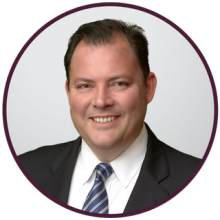
Dr. Richard Downie is the former President & CEO of the Los Angeles World Affairs Council. He is on the faculties of the Thayer Leader Development Group at West Point and Missouri State University’s Defense and Strategic Studies Program, and is the Senior Fellow on Latin America for the Pacific Council on International Policy. He also serves on the World Hwa Rang Do Association, and Westport Construction Inc. Boards and previously chaired the Pacific Council on International Policy’s Mexico Initiative Advisory Board. He is a member of the Council on Foreign Relations.
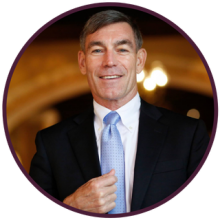
A graduate of the United States Military Academy (USMA) at West Point (Class of 1976), he holds an M.A. and Ph.D. in International Relations from the University of Southern California. Previously, Dr. Downie served for nine years as the Director (SES-3 level) of the William J. Perry Center for Hemispheric Defense Studies in Washington, D.C., the Department of Defense’s regional security center for the Americas. At the Perry Center, he led courses, seminars and conferences on security and defense topics, and national security planning workshops for ministries of defense and cabinet-level national leaders.
During a distinguished military career, he held a wide variety of command and staff positions, serving as an Infantryman and as a Foreign Area Officer specializing in Latin America. Dr. Downie had several assignments in Germany; was an exchange officer in Colombia, where he completed their LANCERO (International Ranger) School as the distinguished graduate; worked at both the U.S. Army South and the United States Southern Command in Panama; coordinated Western Hemisphere affairs on the U.S. Joint Staff; served with the Multinational Specialized Unit in Bosnia; and was the Defense and Army Attaché in Mexico. His final U.S. Army assignment was in command of the Western Hemisphere Institute for Security Cooperation (WHINSEC), where he served as the Institute’s first Commander.
Dr. Downie authored Learning from Conflict: The U.S. Military in Vietnam, El Salvador and the Drug War, Greenwood Press, as well as numerous scholarly articles and other publications. His military education includes the U.S. Army War College, the U.S. Army Command and General Staff Course and the Defense Strategy Course. He was also a Fellow in the Massachusetts Institute of Technology’s Seminar XXI Program.
His US and foreign awards and decorations include: the Defense Superior Service Medal, the Legion of Merit, the Defense Meritorious and the Meritorious Service Medals, the Joint Service and Army Commendation and Achievement Medals, the Army Expeditionary Medal, the Inter-American Defense Board Medal, the Order of Military Merit (Colombia), the Bosnia/ Former Yugoslavia NATO Medal, the Order of Military Merit (Mexico), the Order of the Peruvian Cross (Peru), the Order of Merit for Democracy, Grand Knight level (Colombia), the Superior War College Medal (Colombia), the First Medal of Laws (University of Nuevo Leon, Mexico), and the Order of St. Maurice (Commander-level).
To register for this webinar, visit the Zoom Registration Page.