The State of Peace in 2026
July 7, 2026
10:00am
Webinar
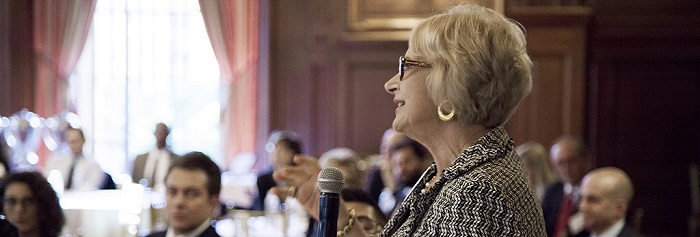
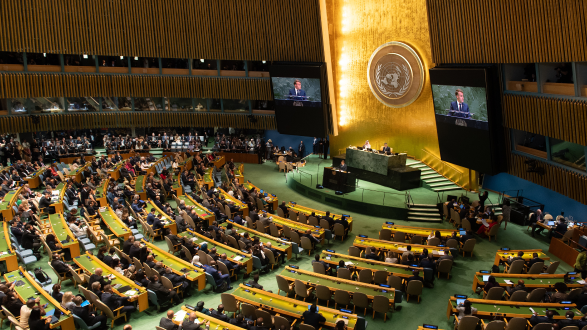
On Tuesday, July 7, at 10 am PT, the Pacific Council, in partnership with the Institute for Economics and Peace (IEP), will host a webinar presenting the findings of the 2026 Global Peace Index (GPI). Released annually in June, the GPI is the world's foremost data-driven assessment of global peacefulness, ranking 163 countries across three domains: societal safety and security, ongoing domestic and international conflict, and militarization. This year's report arrives at a particularly consequential moment for the Middle East and North Africa, a region that has been the key driver of the global deterioration in peacefulness since 2008 and that entered 2026 with cautious diplomatic momentum before the eruption of the Gulf conflict in late February. The 2026 GPI will be the first edition to fully capture the consequences of that escalation, making its findings especially significant for analysts and policymakers focused on the region.
The conversation will consider how the blockade of the Strait of Hormuz and the disruption of oil and natural gas production sent immediate shockwaves through regional and global markets, and what durable stabilization in the region would require going forward. Participants will also explore the IEP's Positive Peace framework, which identifies the institutional and societal factors that sustain long-term stability, and consider where the international community has the greatest leverage to reverse troubling trajectories.
About the Global Peace Index
The Global Peace Index is the world's leading measure of national and international peacefulness, ranking 163 countries across three key domains: societal safety and security, ongoing conflict, and militarisation, based on 23 qualitative and quantitative indicators covering nearly 100 % of the global population. The report provides a comprehensive, data‑driven analysis of current trends in peace, the economic costs of violence, emerging conflict risks, and insights into how societies can build lasting stability.
Why it's important:
- The 2025 GPI found that the world became less peaceful for the 13th time in the last 17 years, marking the sixth consecutive annual deterioration, with 56 active conflicts underway and 92 countries involved in conflicts beyond their own borders, both figures the highest since World War II. The 2026 report will provide the most current picture of whether that slide has continued or stabilized.
- According to an April 2026 SIPRI report, global military expenditure reached $2.887 trillion in 2025, the 11th consecutive year of growth, bringing the world's military burden to 2.5 percent of GDP, its highest level since 2009. This sustained remilitarization, driven largely by the wars in Ukraine and Gaza and accelerating rearmament across Europe and Asia, is a central variable the 2026 GPI will interrogate in its assessment of structural threats to peace.
- The 2025 GPI Briefing identified a troubling divergence in information ecosystems: while technological access has expanded globally, press freedom and information quality have deteriorated, undermining one of the key pillars IEP identifies as foundational to durable peace. The 2026 report will assess whether these trends have accelerated, with direct implications for democratic governance and conflict prevention.
Speakers include:
Michael Collins, Executive Director, Americas, of the Institute for Economics & Peace (IEP)
Dr. Benjamin Radd, MIT Wargaming Lab Fellow; Senior Fellow, UCLA's Burkle Center for International Relations; and Professor, UCLA Law and USC Gould School of Law.
Dr. Paul B. Stares, General John W. Vessey Senior Fellow for Conflict Prevention & Director, Wachenheim Center for Peace and Security, Council on Foreign Relations (CFR)
Alex Vatanka, Senior Fellow, Middle East Institute
To register for this webinar, visit the Zoom Registration Page.
Guest Speaker & Moderator
Michael Collins is Executive Director, Americas, of the Institute for Economics & Peace (IEP), the world's leading think tank dedicated to developing metrics to analyze peace and to quantify its economic value. IEP has pioneered the empirical study of peace, most notably through the annual Global Peace Index, and its research is used extensively by governments, academic institutions, NGOs, and multilateral agencies around the world.
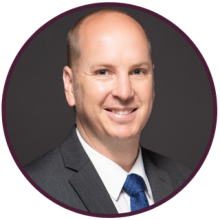
In his role, Michael cultivates and develops new institutional and grass-roots partnerships and has been responsible for significantly expanding IEP’s impact and reach across the United States, the Americas and the United Nations since 2019. Before joining IEP, Michael oversaw educational, job creation, and economic development programs in emerging nations affected by or prone to disaster, where, as a practitioner, he frequently worked with communities affected by poverty and gang violence. As an expert trainer, he has partnered with governments to develop disaster-risk reduction curricula, opened training centers, and supervised training courses for vulnerable youth and adults with low literacy levels.
Michael grew up in Spain, where he studied electro-mechanical engineering before founding and managing a construction company dedicated to the restoration of historical buildings, many of which were over 300 years old. He is a certified mediator, speaks English, Spanish, and French, and lives in the New York area with his wife and three young children.
Guest Speaker
Dr. Benjamin Radd is an Affiliate with the MIT Security Studies Program Wargaming Lab, a Senior Fellow at UCLA’s Burkle Center for International Relations, a lecturer at UCLA Law and USC Gould School of Law, and a contributor to CBS News Los Angeles. A political scientist, legal scholar, and crisis-simulation designer, he writes and speaks on foreign policy, constitutionalism, geopolitical crises, domestic political conflict, and decision-making under pressure. His analysis has appeared in CNN, BBC, Deutsche Welle, CNBC, CBS, NBC, FOX, NPR, and the Los Angeles Times. He is the founder of Fascination Lab, where he designs immersive simulations and strategic learning tools used in academic, government, and political consulting settings.
Guest Speaker
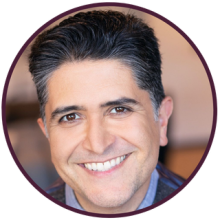
Dr. Paul B. Stares is the General John W. Vessey senior fellow for conflict prevention and director of the Wachenheim Center for Peace and Security at the Council on Foreign Relations (CFR). An expert on conflict prevention and a regular commentator on current affairs, he is the author or editor of nine books on U.S. security policy and international relations. His latest book, Preventive Engagement: How America Can Avoid War, Stay Strong, and Keep the Peace (Columbia University Press, 2017), provides a comprehensive blueprint for how the United States can manage a more turbulent and dangerous world.
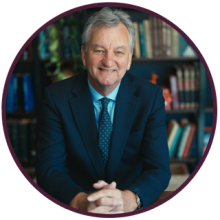
Prior to joining CFR, Stares was vice president and director of the Center for Conflict Analysis and Prevention at the United States Institute of Peace. He worked as associate director and senior research scholar at Stanford University’s Center for International Security and Cooperation from 2000 to 2002 and was senior research fellow at the Japan Institute of International Affairs and then director of studies at the Japan Center for International Exchange from 1996 to 2000. From 1984 to 1996, he was a research associate and later senior fellow in the foreign policy studies program at the Brookings Institution. He has also been a NATO fellow and a scholar in residence at the MacArthur Foundation’s Moscow office.
Stares has participated in various high-level studies, including the Genocide Prevention Task Force co-chaired by Madeleine Albright and William Cohen, the expert working group on the strategic environment for the Iraq Study Group co-chaired by James Baker and Lee Hamilton, and the Task Force on Extremism in Fragile States co-chaired by Thomas Kean and Lee Hamilton. In addition to his most recent book, Preventive Engagement, he has authored or edited numerous books as well as several CFR publications, notably Partners in Preventive Action (Council Special Report No. 62), Managing Instability on China’s Periphery (Asia Security Memorandum), “Enhancing U.S. Crisis Preparedness” (Policy Innovation Memorandum No. 4), “Military Escalation in Korea” (Contingency Planning Memorandum No. 10), Enhancing U.S. Preventive Action (Council Special Report No. 48), and Preparing for Sudden Change in North Korea (Council Special Report No. 42).
Stares has a BA from North Staffordshire Polytechnic and received both his MA and PhD from Lancaster University.
Guest Speaker
Alex Vatanka is a Senior Fellow at the Middle East Institute in Washington D.C., specializing in Middle Eastern security with a particular focus on Iran’s domestic politics and regional strategy. He previously served as a Senior Analyst at Jane’s Information Group in London. Vatanka also teaches at U.S. defense institutions, including the U.S. Air Force Special Operations School and the Defense Institute of Security Assistance Studies, and has testified before the U.S. Congress. His briefings are regularly delivered to the Departments of State and Defense, U.S. intelligence agencies, and international partners.
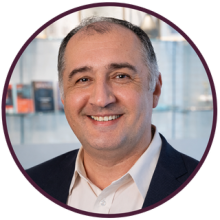
Born in Tehran, Vatanka holds degrees from the University of Sheffield and the University of Essex, and is fluent in Persian and Danish. He is the author of The Battle of the Ayatollahs in Iran (2021) and Iran and Pakistan (2015), and has contributed to numerous edited volumes on Middle Eastern politics and security. His forthcoming book is Grand Contest: The Rivalry of Iran, America, and Israel in the Arab World.
To register for this webinar, visit the Zoom Registration Page.