From Cooperation to Competition: Science Diplomacy at a Crossroads

February 18, 2026
9:00am
Webinar
Science diplomacy is experiencing growing politicization. Once viewed largely as an apolitical mechanism for fostering international research collaboration and mutual understanding, scientific innovation is now increasingly positioned as a strategic asset tied to national power and influence.
On Wednesday, February 18th, at 9 am PT, the Pacific Council will explore how governments are moving away from scientific collaboration and are instead leveraging scientific capabilities to advance economic competitiveness, safeguard digital and technological infrastructure, and strengthen national security. Attendees will hear from Professor Paul Arthur Berkman, Fellow, International Science Council & Founder, Science Diplomacy Center, Dr. Jonathan I. Lunine, Chief Scientist, Jet Propulsion Laboratory, NASA and Pacific Council Science and Technology Senior Fellow, Tony Oweke, Research Fellow, Artificial Intelligence, Council on Foreign Relations (CFR), and Allison Agsten, Director, USC Annenberg’s Center for Climate Journalism and Communication.
Why it’s important:
- Geopolitical polarization is turning science into a national security issue, replacing free exchange with sanctions and techno-nationalism.
- On October 19, 2025, Beijing’s Ministry of State Security and Internet Emergency Center shared the details of a cyberattack they attributed to the United States’ National Security Agency (NSA). This reveal was met with calls for U.S. tech decoupling in China as Beijing amplified the growing suspicion of American technology products.
- Space is emerging as a competitive frontier, with China, India, Israel, etc., all increasing investments in space exploration.
To register for this webinar, visit the Zoom Registration Page.
Guest Speaker
Professor Paul Arthur Berkman is a Fellow of the International Science Council and Founder of the Science Diplomacy Center in the United States. He is a Faculty Associate with the Program on Negotiation at Harvard Law School and a Visiting Distinguished Professor with the International Institute of Science Diplomacy and Sustainability (IISDS) in Malaysia. Paul wintered in Antarctica on a SCUBA research expedition with Scripps Institution of Oceanography in 1981 and became a Visiting Professor at the University of California, Los Angeles the following year at the age of 23, when he began to develop science diplomacy.
Guest Speaker
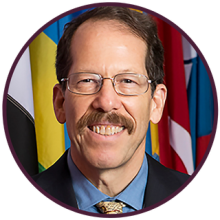
Dr. Jonathan Lunine is Chief Scientist of NASA’s Jet Propulsion Laboratory and Professor of Planetary Science at the California Institute of Technology. He came to Pasadena in 2024 after 13 years as the David C. Duncan Professor in the Physical Sciences, including five years as chair of the Department of Astronomy, at Cornell University in Ithaca, New York. Prior to that, he was on the faculty in Planetary Science and Theoretical Astrophysics at the University of Arizona, Tucson, for 25 years, and Visiting Professor of Astrophysics at the University of Rome Tor Vergata, in Italy, from 2010-2011.

Lunine has performed pioneering research on the formation and evolution of planetary systems, the nature of planetary interiors and atmospheres, and where environments suited for life might exist in the solar system and beyond. He pursues this research through theoretical modeling and participation in spacecraft missions. He was an interdisciplinary scientist on the Cassini/Huygens mission to Saturn and on the James Webb Space Telescope, both joint missions between NASA, the European Space Agency ESA, and other space agencies. Presently, he is a co-investigator on NASA’s Juno mission at Jupiter and the Europa Clipper mission headed to Jupiter’s moon Europa, and a team member on the 3GM gravity experiment on ESA’s JUICE mission on its way to Jupiter’s moon Ganymede.
Lunine is a member of the National Academy of Sciences and has chaired or co-chaired numerous advisory and strategic planning committees for the Academy and for NASA, including the Giant Planet Systems panel for the Planetary Science and Astrobiology Decadal Survey 2023, and "Pathways to Exploration: Rationales and Approaches for a U.S. Program of Human Space Exploration."
Lunine received a B.S. in Physics and Astronomy from the University of Rochester and M.S. and Ph.D. degrees from the California Institute of Technology.
Guest Speaker
Tony Oweke is a research fellow at the Council on Foreign Relations (CFR). He specializes in artificial intelligence (AI) governance and digital policy and has experience in macroeconomic policy.
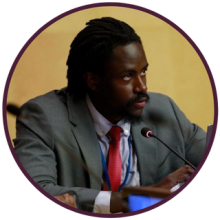
Prior to joining CFR, Oweke served as a digital advisor for the Kenyan Mission to the United Nations, negotiating and supporting key processes for Kenya, including serving as the country’s technical lead for the recently adopted twenty-year review of the World Summit on the Information Society, which was co-facilitated by Kenya and Albania. Additionally, he represented the Group of Seventy-Seven (G77) and China, a negotiating bloc of 134 developing countries, on AI at the United Nations. He successfully bargained on its behalf for the establishment of a Scientific Panel on AI and an AI Governance Dialogue and subsequently represented the group in negotiations to define the structure and scope of those two institutions. Alongside Kenya’s special envoy on technology, Phillip Thigo, and other contributors, Oweke coauthored Kenya’s first Diplomats’ Playbook on Artificial Intelligence, an institutional resource providing foreign services with a shared conceptual, ethical, and practical foundation for engaging on AI governance.
As an economic advisor for the mission before shifting to digital policy, Oweke represented Kenya in arrangements to establish a Framework Convention on International Tax Cooperation. He also represented the G77 on Illicit Financial Flows for two years and Kenya in the executive boards for the UN Development Program, the UN Population Fund, the UN Office for Project Services, UN Women, and the UN Children’s Fund. In his role for the executive boards, Oweke led negotiations to approve agency budgets and strategic plans and cochaired the working group tasked with reforming executive board governance for those five entities.
Before the mission, Oweke interned at the African Union, International Development Law Organization, and Institute for Conscious Global Change. He holds a bachelor’s degree in international studies, a master’s degree in international relations from Leiden University, and a master’s degree in political economy from the University of Amsterdam.
Moderator
Allison Agsten is the inaugural director of USC Annenberg’s Center for Climate Journalism and Communication, where she develops initiatives to bolster public understanding of – and response to – climate change. She is also executive producer of the USC energy transition podcast series, Electric Futures, and the author of a range of reports addressing climate change and the media, corporate sustainability practices, and policy-related issues.

In addition to her appointment at the Annenberg School, Agsten serves as the USC Wrigley Institute for Environment and Sustainability’s first curator. In that position, she facilitates creative expression at the intersection of art and climate on USC’s main campus and at the Wrigley Marine Science Center on Catalina Island. Agsten also provides support to faculty, staff, and students in her work as an eco-chaplain within the university’s Office of Religious Life. At USC, she is a fellow of the Los Angeles Institute of Humanities and an affiliate with the Schaeffer Behavioral Science and Policy Initiative. She is also an affiliate of the University of Alaska Anchorage Department of Biological Sciences and the Belfer Center for Science and International Affairs at the Harvard Kennedy School.
Previously, Agsten has held roles in the fields of journalism, communications, and public engagement, including as a producer at CNN, Director of Communications at LACMA, and Curator of Public Engagement at the Hammer Museum. Her work has been recognized by the city and the county of Los Angeles, the 28th United Nations Climate Change Conference, a range of philanthropic organizations, and local, national, and international media.
Agsten holds a BA from UCLA and an MPA from the Harvard Kennedy School.
To register for this webinar, visit the Zoom Registration Page.